


02 Dec CMMC SSP Template Guide for Compliance Success
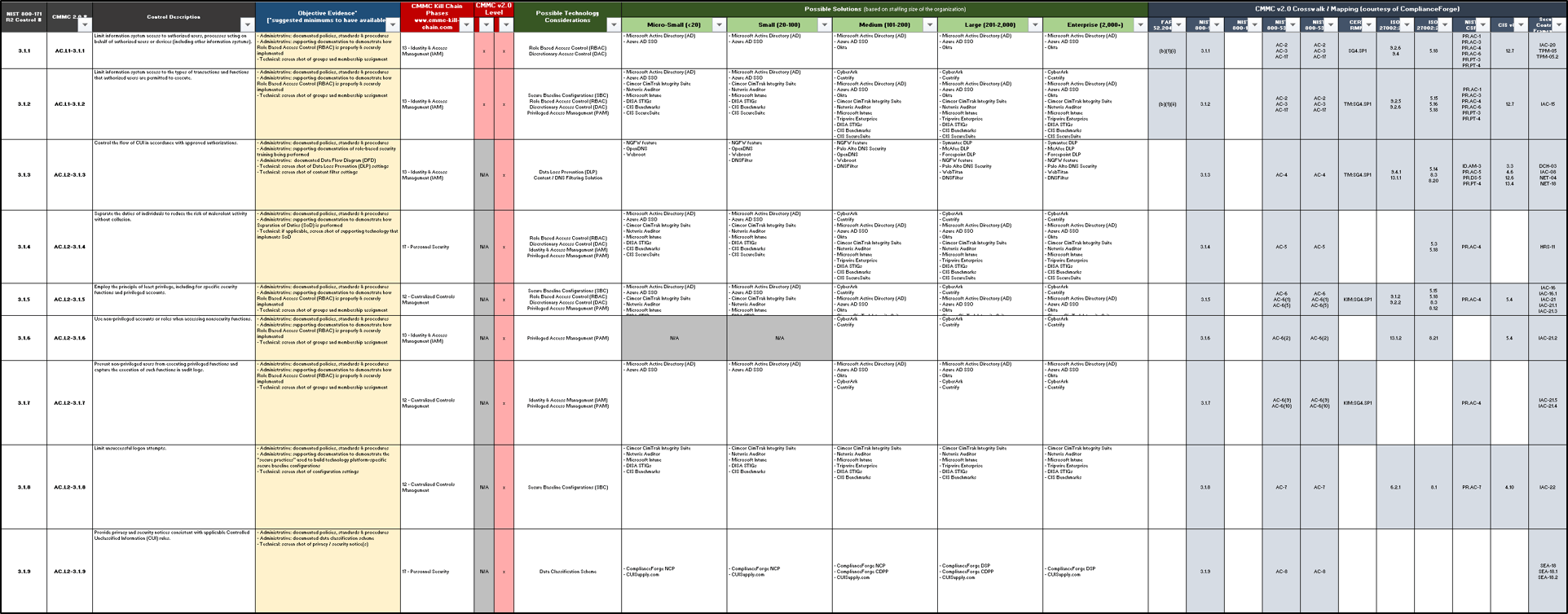
The Ultimate CMMC SSP Template Guide: Streamline Your Compliance
Estimated reading time: 12 minutes
Key Takeaways
- Be sure to visit our CMMC Compliance Readiness for more information including the SSP requirements.
- Pre-built CMMC SSP templates accelerate compliance documentation and reduce errors.
- A well-structured POA&M (POEM) tracks remediation actions with clear ownership and timelines.
- Consistency, specificity, and version control are critical for assessor confidence.
Table of contents
- What Is a System Security Plan?
- Why Use a CMMC SSP Template?
- Understanding the POA&M (Plan of Action & Milestones)
- Key Elements of a CMMC POEM Template
- SSP and POEM Examples
- Step-by-Step Guide to Completing Your SSP and POEM
- Best Practices and Common Pitfalls
- Call to Action
- Conclusion
- Frequently Asked Questions
What Is a System Security Plan?
A system security plan (SSP) is a comprehensive document that describes your organization’s system architecture, implemented security controls, and compliance posture under CMMC. As defined by NIST SP 800-171/172, the SSP serves as your primary evidence that required controls are properly implemented and maintained.
The regulatory context varies by level, with CMMC Level 2 focusing on NIST 800-171 controls and Level 3 extending to NIST 800-172 requirements. Both levels demand thorough documentation for successful assessment.
Your SSP fulfills several critical objectives:
- Document all security controls across your entire environment
- Assign clear responsibilities for each control’s implementation
- Demonstrate compliance to assessors with concrete evidence
- Identify gaps between current security posture and required state
Organizations often struggle when drafting an SSP from scratch due to:
- Insufficient technical depth in control descriptions
- Inconsistent narratives across different sections
- Accidentally omitted controls or requirements
- Vague statements that don’t satisfy assessor expectations
Using a structured CMMC SSP template eliminates these common pitfalls while ensuring your documentation meets certification requirements.
Why Use a CMMC SSP Template?
Accelerated Development: Pre-structured sections mean your team can focus immediately on content rather than worrying about formatting or organization. This cuts documentation time by weeks or even months.
Built-in Control Alignment: Templates are pre-mapped to CMMC control families and levels, eliminating the risk of accidentally omitting critical requirements. Each control family is clearly organized with appropriate cross-references.
Consistency & Quality: Templates enforce uniform language, formatting, and structure across your documentation. This consistency makes assessor reviews more efficient and reduces questions about your compliance posture.
Error Reduction: Good templates include embedded guidance notes and best-practice tips that help prevent generic or incomplete entries. These prompts ensure you provide the specific details assessors need to validate compliance.
Whether you’re just starting your CMMC journey or refining existing documentation, a well-designed template significantly reduces errors, saves time, and improves assessment outcomes. For more details, refer to the NIST CUI SSP Template.
Understanding the POA&M (Plan of Action & Milestones)
The POA&M (often called “POEM”) is a critical companion document to your SSP. While the SSP documents controls you’ve already implemented, the POA&M tracks deficiencies and outlines your plan to address them.
As you develop your SSP, you’ll identify gaps between your current security controls and CMMC requirements. Each gap becomes an entry in your POA&M with detailed corrective actions.
A well-structured CMMC POEM template standardizes:
- Formal gap documentation with comprehensive risk assessment
- Prioritized remediation actions based on impact and feasibility
- Clearly assigned owners for each remediation task
- Realistic due dates that balance urgency with resource availability
- Systematic progress tracking from identification through resolution
Your POA&M demonstrates to assessors that you’ve identified weaknesses and have a concrete, time-bound plan to address them. This transparency strengthens your compliance position during certification reviews.
For an example layout, see the NIST CUI SSP Template.
Key Elements of a CMMC POEM Template
An effective CMMC POEM template includes several pre-formatted fields that ensure comprehensive tracking of each security gap:
- Control ID: References the specific requirement (e.g., AC-2, IA-2) to maintain clear traceability to the source control.
- Finding Description: Clearly articulates the gap between current state and requirements, with enough detail for anyone to understand the issue.
- Root Cause Analysis: Documents why the gap exists—whether from process failures, technology limitations, resource constraints, or knowledge gaps.
- Remediation Action: Outlines specific steps needed to close the gap, including technologies to implement, processes to develop, or training to conduct.
- Owner & Due Date: Assigns a responsible individual with authority to implement changes and establishes a reasonable completion timeline.
- Progress Status: Tracks whether the item is Planned, In Progress, or Complete to provide real-time visibility into remediation efforts.
Regular updates to your POEM demonstrate continuous improvement and commitment to compliance—a factor assessors view positively during certification reviews.
SSP and POEM Examples
Sample SSP Control Narrative
Control: Access Control (AC-2)
“Our organization implements account management through Active Directory domain services. New account requests are submitted through our ServiceNow ticketing system and require documented approval from the employee’s manager and the Information Security team. Upon approval, the IT team provisions accounts within 24 hours according to our least-privilege model.
All user accounts undergo semi-annual reviews by department managers to verify continued operational need. Administrative accounts receive additional quarterly reviews by the Security team. All review documentation is maintained in our GRC platform with explicit sign-off from responsible parties.
Account termination follows our documented offboarding procedure, with access revocation occurring within 4 hours of termination notification.”
Sample POA&M Entry
| Control ID | Finding | Root Cause | Remediation Action | Owner | Due Date | Status |
|---|---|---|---|---|---|---|
| IA-2 | Multi-factor authentication not implemented for administrator accounts | Lack of compatible authentication infrastructure | 1. Purchase hardware security keys for all administrators 2. Update access policy to mandate MFA 3. Deploy MFA solution to Active Directory 4. Train IT staff on new authentication procedures |
IT Director | 2025-12-31 | In Progress |
Step-by-Step Guide to Completing Your SSP and POEM
Phase 1: Inventory Assets & Map to Controls
Begin by building a comprehensive Hardware & Software Inventory (HSI) that documents every system component, including make, model, version, service packs, and responsible owners. This inventory provides the foundation for your SSP by clarifying what needs protection.
Next, map each CMMC requirement to existing assets and processes to identify where controls need documentation or implementation. This mapping exercise reveals both strengths and gaps in your current security posture.
Phase 2: Populate the CMMC SSP Template
With your inventory complete, systematically populate each section of your SSP template:
- System Identification: Provide your system’s name, unique identifier, and categorization based on data sensitivity.
- System Architecture: Include physical and logical diagrams showing system boundaries, key components, and connections to external systems.
- Roles & Responsibilities: List who owns and operates each aspect of your security program, from executive oversight to day-to-day administration.
- Control Implementation Details: For each CMMC requirement, describe how your organization satisfies the control using specific policies, procedures, and technologies.
- Appendices: Include your hardware/software inventory, network diagrams, data flow documentation, and supply chain information.
Phase 3: Conduct Gap Analysis & Populate POEM Remediation Plan
Compare your completed SSP against all applicable CMMC requirements to identify any controls that are:
- Missing entirely
- Partially implemented
- Implemented but undocumented
- Documented but not effectively implemented
Document each deficiency in your POEM with appropriate risk severity and realistic timelines. Ensure your SSP contains only current practices—anything aspirational belongs exclusively in the POA&M.
Phase 4: Review, Validate & Finalize
Engage stakeholders from IT, legal, compliance, and leadership in a structured review of both documents. Verify that narratives accurately reflect actual operations and that POA&M timelines are achievable with available resources.
Address all feedback, finalize both documents, and establish version control with a clear change-log process to track future updates. Refer to the NIST CUI SSP Template for detailed guidance.
Best Practices and Common Pitfalls
- Maintain Version Control: Implement rigorous version management with detailed change logs for both documents. This creates an audit trail that demonstrates ongoing compliance management.
- Keep Narratives Specific: Avoid vague statements like “we follow best practices.” Instead, describe exactly how controls operate in your environment with specific tools, processes, and responsibilities.
- Focus on Current State: Your SSP should document only controls actually in place today. Future plans belong exclusively in your POA&M.
- Provide Concrete Evidence: For each control, reference specific policies, procedures, configurations, or other evidence that demonstrates implementation.
- Update Regularly: Both documents require ongoing maintenance as your environment changes and remediation efforts progress.
- Use Collaborative Storage: Maintain your SSP, POA&M, and all supporting evidence in a secure, accessible repository that facilitates collaboration and updates.
Remember that assessors look for specificity, accuracy, and honesty in your documentation. A well-maintained POA&M with realistic remediation plans reflects better on your organization than an SSP that makes claims you can’t substantiate.
Refer to the NIST CUI SSP Template for additional examples and templates.
Call to Action
Ready to streamline your CMMC journey? Download our ready-to-use SSP and POA&M template resources today. We offer both free starter templates and premium customizable versions tailored to your specific environment and target CMMC level.
Not sure which template is right for you? Schedule a free 30-minute consultation with our CMMC specialists to discuss your specific needs and get personalized recommendations for your compliance journey.
Conclusion
Standardized SSP and POA&M template resources are invaluable tools for organizations pursuing CMMC certification. They eliminate guesswork, accelerate documentation timelines, and ensure comprehensive coverage of all requirements.
Remember that your SSP and POA&M are living documents that should evolve alongside your security program. Regular updates demonstrate your commitment to continuous improvement—a core principle of the CMMC framework.
By leveraging the examples and guidance provided here, you can create documentation that not only satisfies assessment requirements but also provides genuine value as a roadmap for strengthening your security posture.
Frequently Asked Questions
What’s the difference between SSP and POA&M?
The SSP documents security controls you’ve already implemented, while the POA&M tracks gaps and planned remediation efforts. Together, they provide a complete picture of your current security posture and improvement roadmap.
How often should I update my SSP?
Review and update your SSP at least annually and whenever significant changes occur to your systems, organization, or security controls. Always refresh it before assessments to ensure accuracy.
Can I use one template for multiple CMMC levels?
While some templates are adaptable across levels, most provide level-specific guidance because requirements increase in complexity from Level 1 to Level 3. Choose a template aligned with your target certification level.
What supporting evidence should I maintain?
Gather policies, procedures, configuration standards, network diagrams, training records, access control matrices, and audit logs that demonstrate control implementation.